■ Working alongside case managers & treating clinicians
Rehabilitation support, delivered with care and consistency.
I'm Rob McLellan, BSc (Hons), GMBPsS — founder of Optimatter and a self-employed rehabilitation therapy assistant supporting people with neurological injury and mental health needs in the community. Working under the direction of each client's treating clinicians, I help put their rehabilitation plans into practice, and keep clear, detailed session records your team can act on.
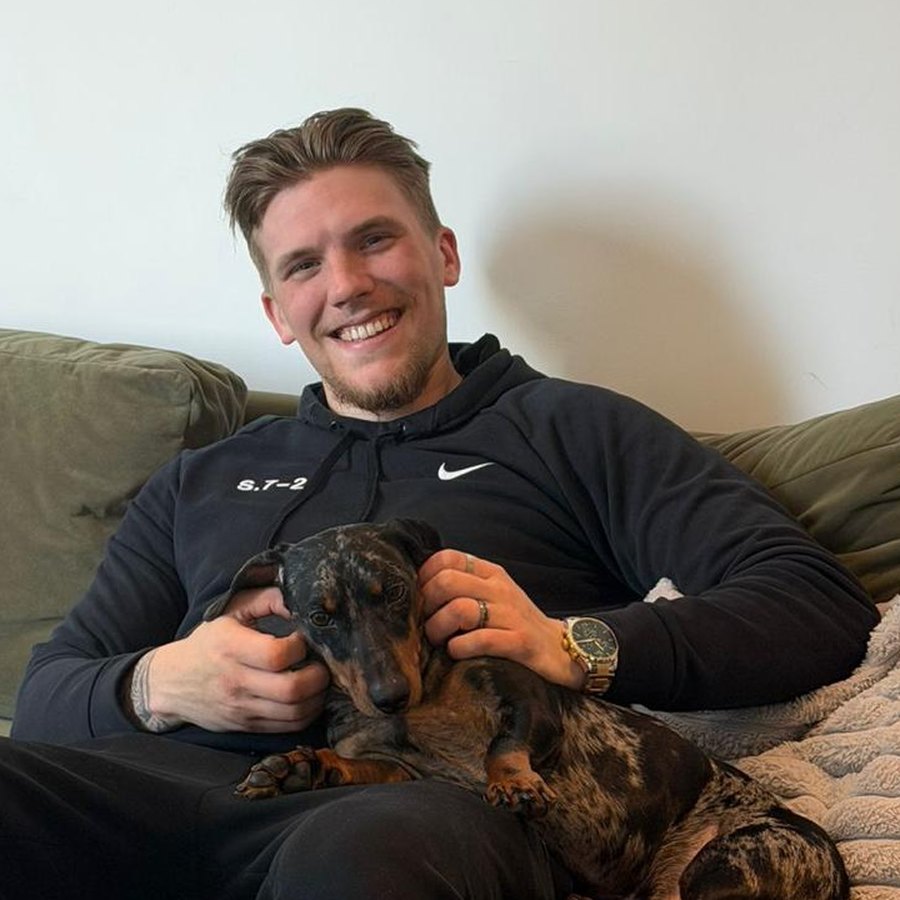
Specialist Rehab Assistant
01
Community
rehabilitation support
For referrers
How I work with your team
Whether you're commissioning a rehabilitation package or coordinating care across a wider clinical team, here's what to expect from working together. Clinical assessment, diagnosis and treatment planning stay with the treating clinicians; my role is to support that plan day to day.
01 / 02
Case managers
- ○ Communicative, timely session records with monthly reviews
- ○ Progress towards agreed goals reported at every review
- ○ Flexible commissioning across Greater Manchester, 2-hour radius
02 / 02
Treating therapists
- ○ Supporting your OT, psychology and SLT programmes in the community, within the scope you set
- ○ Consistent communication between sessions, with concerns escalated to you promptly
- ○ Experience supporting the full MDT: OT, psychology, SLT, physiotherapy
The work
What does a rehabilitation therapy assistant do?
Psychologically-informed, practical support for people with acquired brain injuries and complex neurological or mental health needs — carrying out the programmes set by the treating team, reinforcing their strategies between sessions, and keeping detailed records that support MDT decision-making.
01
Programme delivery
Structured, individualised sessions that put each client's therapy plan into practice, as set by their clinicians.
02
Skill development
Practising the everyday skills recovery depends on, at the client's own pace.
03
Emotional support
A steady, familiar presence through the parts of recovery that aren't purely physical.
04
Reinforcing strategies
Helping clients and families put the information and strategies from the treating team into everyday use.
05
Working towards goals
Supporting the goals agreed by the client and treating team, and reporting progress back to the MDT.
06
Community integration
Practising recovery in the real settings clients are working to return to.
07
Purposeful, hands-on activity
Rebuilding confidence through practical, MDT-led tasks built around each client's interests — from building, decorating and assembly projects to vehicle maintenance and mechanics.
In practice
My approach
Working directly with clients on routines, emotional regulation, behavioural stability and independence in daily living — reinforcing the evidence-based strategies set by their treating clinicians, such as graded exposure, CBT-informed techniques and goal-oriented programmes.
01
Supporting therapy plans
Putting clinician-designed plans into practice between their sessions, within the scope they set and with regular feedback to them.
02
Family support
Reinforcing the treating team's guidance so families feel confident supporting their relative day to day.
03
Risk awareness & escalation
Following agreed risk plans, maintaining professional boundaries, and noticing changes in behaviour, fatigue or presentation — escalating concerns promptly to the treating team and case manager.
04
Documentation & MDT liaison
Detailed session records that capture observations — such as fatigue — alongside progress, giving the treating team and case manager clear information to inform their decisions.
05
Continuity & stability
A consistent point within the client's support network — modelling good practice for support workers, reinforcing agreed approaches, and helping maintain continuity across disciplines.
06
A psychology-informed approach
A psychology degree and graduate BPS membership inform how I support clients, alongside safeguarding training and clear professional boundaries.
Experience
Why me
Experience supporting people through neurological and mental health rehabilitation, including degenerative and acquired neurological conditions such as traumatic and perinatal brain injury, alongside language and communication difficulties, memory impairment and rarer neuropsychological presentations.
Alongside my own practice, I've worked as an Assistant Case Manager, an Occupational Therapy Assistant and a Psychology Assistant, so I understand what each part of the team needs from the person supporting the client day to day. I work within multidisciplinary pathways led by occupational therapists, psychologists, speech and language therapists and physiotherapists, keeping detailed session notes and progress records that evidence client progress.
“Recognised for strong rapport-building, analytical thinking and person-centred support — and for reports that are thorough, precise and grasp the detail of each interaction.”
2021
Optimatter founded
BSc · GMBPsS
Psychology graduate, BPS member
Greater Manchester
2-hour working radius
Records · Progress · Escalation
Clear reporting to the treating team
Feedback
In their words
Feedback from the clients, families and professionals I work alongside. Names are withheld to protect client confidentiality, and feedback is shared with permission.
Rob helps me stay focused and makes tasks feel manageable.
We've noticed steady improvements since Rob became involved, and communication has been clear throughout.
Rob's reporting is concise, clinically aligned, and reliably informs MDT decision-making.
Rob provides consistent, structured support that directly contributes to the client's functional progress.
Rob reinforces communication strategies effectively, which supports the client's confidence in everyday interactions.
Rob encourages safe participation in mobility work and shows good awareness of the client's physical limits.
Professional history
Career
- 01
2021 – Present
Founder & Self-employed Rehabilitation Therapy Assistant
Optimatter · long-term practice
- Delivering community rehabilitation support for clients with acquired brain injury and complex needs, working to plans set by their treating clinicians.
- Running a self-employed practice end to end: referrals, scheduling, session records, insurance and data protection.
- Developing technology for rehabilitation, including bespoke client apps, a digitised neuropsychological test and a proposed digital care ecosystem.
- 02
2025 – 2026
Psychology Assistant
Neuropsychology service
- Supported neuropsychology-led caseloads, assisting with assessment administration and report preparation under the direction of a practitioner psychologist.
- Deepened my understanding of cognitive, emotional and behavioural presentations after brain injury, and how psychological strategies are applied in practice.
- Strengthened detailed, objective record-keeping that supports clinical review.
- 03
2024 – 2025
Occupational Therapy Assistant
Community occupational therapy
- Carried out OT-led programmes focused on daily living skills, routines and independence.
- Learned how functional goals are set, graded and measured, and how to report progress against them.
- Gained experience supporting practical strategies and adaptations in clients' homes and communities.
- 04
2022 – 2024
Assistant Case Manager
Case management
- Supported case managers to coordinate rehabilitation packages across the MDT.
- Gained insight into commissioning and funding, and what case managers need from reports and support teams.
- Liaised with clients, families, therapists and support workers to keep care joined up.
- 05
Oct 2020 – Jun 2021
SEN Teaching Assistant
Education setting
- Supported children with a range of learning, communication and behavioural needs.
- Learned to build rapport, adapt tasks to the individual and work to support plans set by teachers and specialists.
- Built the foundations of patience, consistency and positive behaviour support that underpin my work today.
Core skills
- Community Rehabilitation Support
- Executive Function Support
- Risk Awareness & Escalation
- Functional Observation
- Progress Recording & Reporting
- Supporting Behavioural Activation
- Supporting Graded Exposure
- MDT Collaboration
- Support Worker Coaching
- Technological Adaptations
- Rehabilitation Technology & Data
Systems thinking
Technology in practice
Alongside rehabilitation support, I've helped develop technical resources for rehab teams — bespoke apps, a digitised neuropsychological test for clinician use, and a proposed digital care ecosystem designed to close the gaps in medication safety, handovers and family visibility that generic tools leave behind.
Bespoke rehab apps
Custom digital tools built around individual clients' routines and goals, helping them and their support teams follow the plan set by the treating clinicians.
Digitised neuropsychological test
Helped develop a digital version of a neuropsychological test, for administration and interpretation by qualified clinicians.
Carer app
Clear routines, guided tasks, a structured medication workflow and incident reporting — accessible even without internet, on every shift.
Living Care Passport
A dynamic, always-updated profile of routines, risks, triggers, preferences and emergency protocols — one source of truth in place of scattered notes.
Manager & family portal
Real-time visibility of care delivery, schedules, logs and updates, with role-based access for carers, therapists, managers and families.
Secure infrastructure
Data protection, access control and encrypted communication designed into the core of the system, not bolted on.
Connected practice
Professionals I work alongside
- Psychologists
- Psychiatrists
- Counsellors
- Deputies
- Case managers
- Occupational therapists
- Physiotherapists
- Podiatrists
- Dieticians
Breadth of experience
Conditions I've supported clients with
- Acquired brain injury
- Perinatal brain injury
- Episodic memory impairment
- Degenerative neurological conditions
- Trauma-related presentations
- Executive dysfunction
- Dysexecutive syndrome
- Chronic pain
- Catatonia
- Complex orthopaedic injuries
- Aphasia (Broca's & Wernicke's)
- Apperceptive agnosia
- Dysphasia
- Dysphagia
- Emotional & behavioural disorders
- Physical & sensory disorders
Standards & assurance
Qualifications & checks
- 01BSc (Hons) Psychology, University of Salford
- 02Graduate Member, British Psychological Society (GMBPsS)
- 03Registered with the ICO as a data controller
- 04Enhanced DBS check, current
- 05Mandatory training: Safeguarding (Adult & Child), Emergency First Aid
- 06Professional indemnity & public liability insurance
- 07Vehicle insured for business use
- 08Ongoing CPD to maintain good practice
CV, insurance certificate, DBS certificate, training credentials and terms of business are available on request.
Start a conversation
Think I could be the right fit for your client?
If you feel I could support a client on your caseload, get in touch to discuss a referral. You can also email to request my CV, insurance and DBS documentation.